

- Name: Rev. Yeremia Zanambani
- Institution: Indonesian Evangelical Christian Church (Gereja Kemah Injil Indonesia; GKII)
- Archive Type: People
- Date Published/Inaugurated: –
- First Publisher: –
- Language: Bahasa Indonesia
- Available File(s): Photo(s)
- Keywords: Yeremia Zanambani, Papua, gold mining, protest, land exploitation, murder, military person.
- Link: https://www.bbc.com/indonesia/dunia-54883234
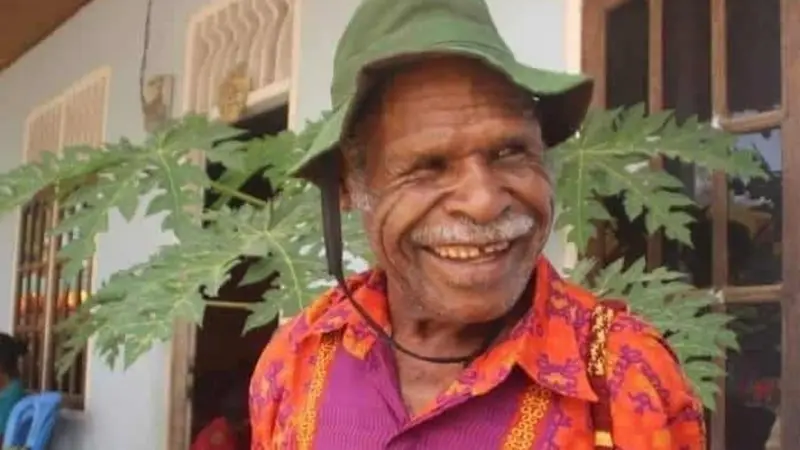
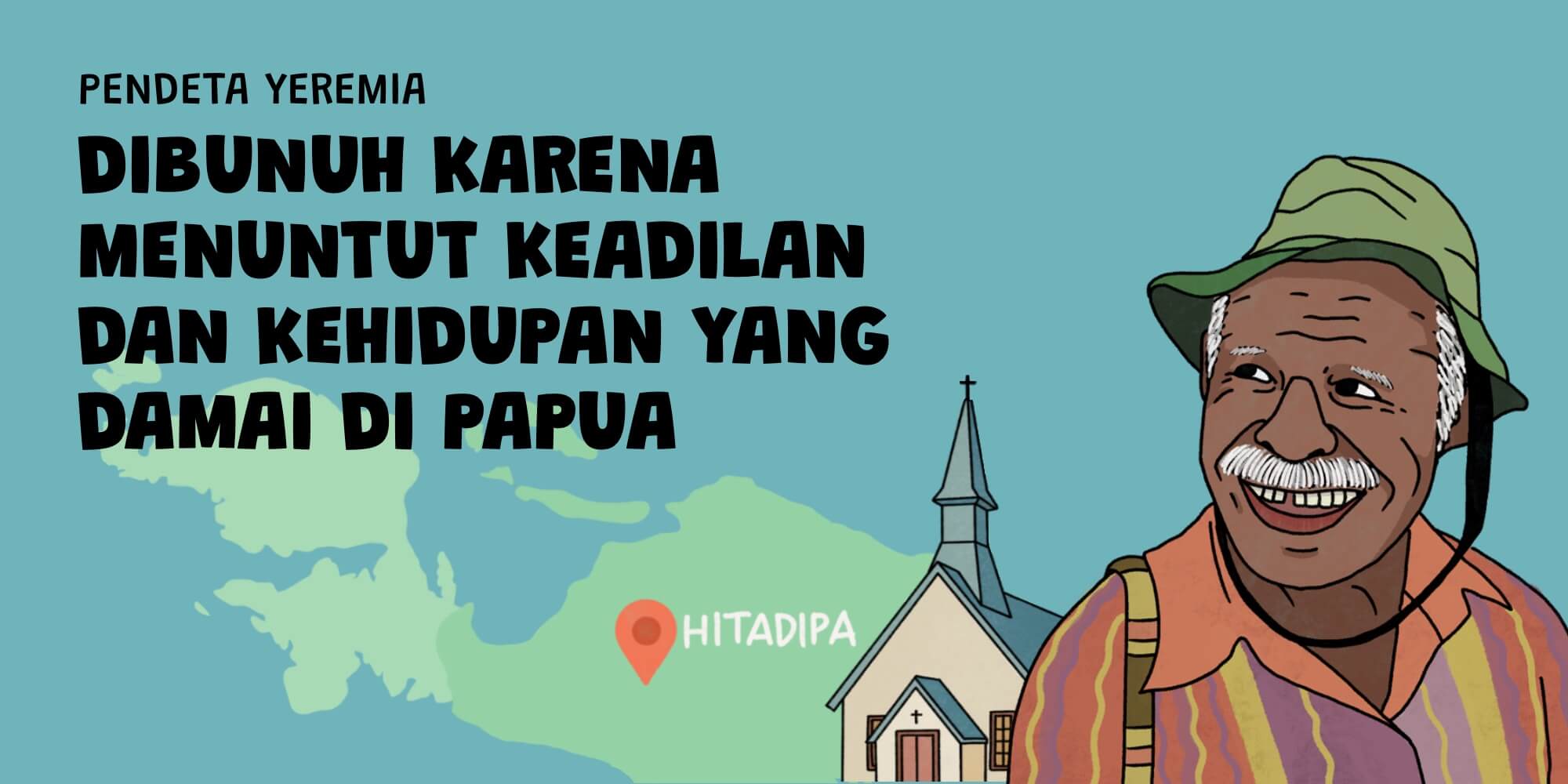
Yeremia Zanambani is a Papuan pastor and head of chapters at Indonesian Evangelical Christian Church (Gereja Kemah Injil Indonesia; GKII) Hitadipa, Papua. Most people know him as an environmental defender and a friend for those who lived under the extractive regime. He is specifically an important figure in the public rejection of the establishment of gold mining in Wabu Mountain, Papua. On Saturday, September 19, 2020, he died due to gunshots. As BBC News Indonesia has reported, this case is an addition to plenty of previous cases that killed Papuan church ministers and pastors.
Rev. Yeremia’s body was discovered in a pigpen in the village of Hitadipa, Hitadipa District, Intan Jaya Regency, Papua. On that evening when they had been looking forward to going to the church the next day, Meriam Zoani Zanambani, his wife, fell to her knees in shock when she found her husband’s body lying and facing down to the ground. Initially, the police and military accused the Papuan armed criminal group (Kelompok Kriminal Bersenjata; KKB) of carrying out the shooting. However, further investigation revealed that the actual perpetrators were members of the Indonesian military.
As reported by Suara.com, Rev. Yeremia’s family has authorized the autopsy under several conditions. The autopsy shall be conducted by an independent medical team approved by the victim’s family, with help from other trusted bodies, such as the National Commission on Human Rights, the victim’s family’s legal counsel and witnesses, the Papua Law Enforcement and Human Rights Coalition, Amnesty International Indonesia, the Intan Jaya Regency DPRD, and the Communion of Churches in Indonesia (Persekutuan Gereja-gereja Indonesia; PGI). In addition, the autopsy must only be conducted in their hometown, Hitadipa.
The investigation revealed a gruesome scene: at least 19 bullet holes, fired from 14 separate points, riddled the exterior, interior, and roof of the pigsty. The National Human Rights Commission (Komnas HAM) strongly suspects that the indiscriminate firing was a deliberate attempt to cover up the true nature of the killing. Military personnel of the Indonesian National Army (Tentara Nasional Indonesia; TNI), Alpius Hasim Madi, was allegedly accused of being one among several shooters.
Papuan College Students Alliance (Aliansi Mahasiswa Papua; AMP) and Indonesian Association of Central Papua Students gathered on November 16, 2020, for a demonstration in the central Jakarta, called Papua Menggugat (Papua Suing). They claimed that the killing was closely related to the people’s environmental activism against the gold mining plan. Ambrosius Silait, as reported by Suara.com, explained that the violent shooting, that was related to Inalum Inc. and Antam Inc, was caused by “the interests driven by the government itself.”
Christian community mourns over this tragic event. Former PGI chairman, Rev. Gomar Gultom, “strongly condemn[s] the shooting.” At the global level, Alliance World Fellowship (AWF) invites its members to pray for “peace and consolation for the pastor’s family” as well as asks God to “take care … and protect” them. AWF also recalls that Rev. Yeremia was “well known and respected” among Papuans. For the work of Christian mission, he translated the Bible into the Moni language.
Four years later, the case is hung, as Amnesty International states, “without justice.” Black September, a special news highlight by Kompas.com, revisits Rev. Yeremia’s case and insists that this case extends the long-standing suspicion of military authorities in Papua. Like other cases, here Papuan people and national military bodies accused one another. In the eyes of the TNI, Rev. Yeremia was involved in KKB during September 17-19, 2020, where a TNI personnel was killed in a firegun engagement. According to the National Human Rights Commission, this accusation was preceded by the fact that Jeremiah was loud enough to ask the TNI for the whereabouts of his two family members. Regardless, Black September views that Rev. Yeremia was subjected to torture and ultimately met a brutal end through “extrajudicial” execution.
Rev. Yeremia’s case, and other similar cases experienced by environmental defenders around the world, is important for scholars who research religion, ecology, and coloniality. Catholic and Latin American studies scholar Elizabeth O’Donnell Gandolfo, for instance, has provoked that such similar cases can be interrogated in terms of “ecomartyrdom.” Ecomartyrs are the ones who have been victims of the violence of “sinful, anti-ecological, and anti-social” practices of extractivism. Extractivism itself is the same ideology and practice in the contemporary era that is in line with the colonial past. Accordingly, listening to those who resist and become victims of extractivism is a faithful act that makes our theology center the margins.
Photo(s)
Source(s)
- Amnesty International, “Pembunuhan Pendeta Yeremia: Empat Tahun Tanpa Keadilan,” Amnesty.id, September 19, 2024. https://www.amnesty.id/kabar-terbaru/siaran-pers/pembunuhan-pendeta-yeremia-empat-tahun-tanpa-keadilan/09/2024/
- Bangun Santoso and Ria R. N. Sari, “Keluarga Setuju Jenazah Pendeta Yeremia Diautopsi, Tapi dengan Syarat.” Suara.com. February 16, 2021. https://www.suara.com/news/2021/02/16/061358/keluarga-setuju-jenazah-pendeta-yeremia-diautopsi-tapi-dengan-syarat
- BBC News Indonesia, “Pendeta Yeremia Tewas Ditembak di Papua…” September 18, 2020, https://www.bbc.com/indonesia/dunia-54883234.
- Elizabeth Brandão, “Reverend Yeremia Zanambani Shot Dead in Papua.” Alliance World Fellowship. November 12, 2020. https://awf.world/awf-news/reverend-yeremia-zanambani-shot-dead-in-papua/
- Elizabeth O’Donnell Gandolfo, Ecomartyrdom in the Americas: Living and Dying for Our Common Home (Maryknoll, NY: Orbis, 2023).
- M. Choirul Anam, “Komnas HAM Beberkan Hasil Temuan dalam Kasus Penembakan Pendeta Yeremia.” Komnas HAM Republik Indonesia. Komnasham.go.id. October 20, 2020. https://www.komnasham.go.id/index.php/news/2020/10/20/1609/komnas-ham-beberkan-hasil-temuan-dalam-kasus-penembakan-pendeta-yeremia.html
- Siswanto, “Kasus Pendeta Yeremia Masih Menunggu Autopsi.” Suara.com. December 25, 2020. https://www.suara.com/news/2020/12/25/030000/kasus-pendetayeremia-masih-menunggu-autopsi
- The Jakarta Post. “Churches Union Condemns Shooting that Killed Pastor in Papua, Urges Jokowi to Take Action.” September 21, 2020. https://www.thejakartapost.com/news/2020/09/21/churches-union-condemns-shooting-that-killed-pastor-in-papua-urges-jokowi-to-take-action.html
Written by Abel K. Aruan (September 10, 2024); Edited by Abel K. Aruan (January 2, 2025).