

- Title: Shield for Oligarchs: NU and the Political Economy of Mining Concession Policies
- Author: Muhammad Akbar Darojat Restu Putra
- Archive Type: Article
- Published: July 23, 2024
- Website/Publisher: Islam Bergerak (The Moving Islam)
- Available File(s): Photos
- Keywords: Islam Bergerak, Muhammad A. D. R. Putra, counterhegemony, Nahdlatul Ulama, Muhammadiyah, Jokowi, Prabowo, mining concessions, oligarchy.
- Link: https://islambergerak.com/2024/07/tameng-bagi-oligarki-nu-dan-ekonomi-politik-kebijakan-konsesi-tambang/
It was shocking for academics and environmental activists when, under Jokowi’s presidency, the government granted community organizations (organisasi masyarkat; ormas) mining concessions. Two biggest and well-respected Islamic organizations such as Nahdlatul Ulama (NU) and Muhammadiyah welcomed with joy. It was understood that the administration looked for support from these ormas during the presidential campaign of Prabowo Subianto with Gibran Rakabuming Raka, Jokowi’s own son.
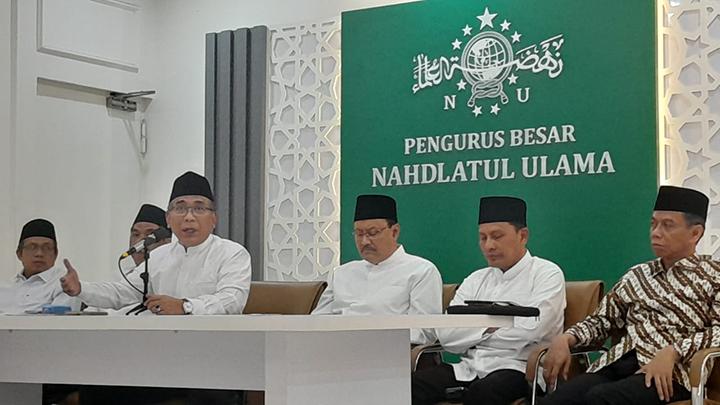
Muhammad Akbar Darojat Restu Putra (Sunan Ampel National Islamic University; UIN) wrote in his article that this “economic-political” move was intended to create a “shield for oligarchs.” Published by Islam Bergerak (The Moving Islam), the article opens with his claim that “Religion is not a sacred entity that has never known decay. There was a time when religion became corrupt when it was used for narrow political gain.” His critique is aimed mainly at NU, stating that when NU wants to receive the concessions, it must be willing to be a “laundry machine” for the bloodstains and dirt on the government’s body.
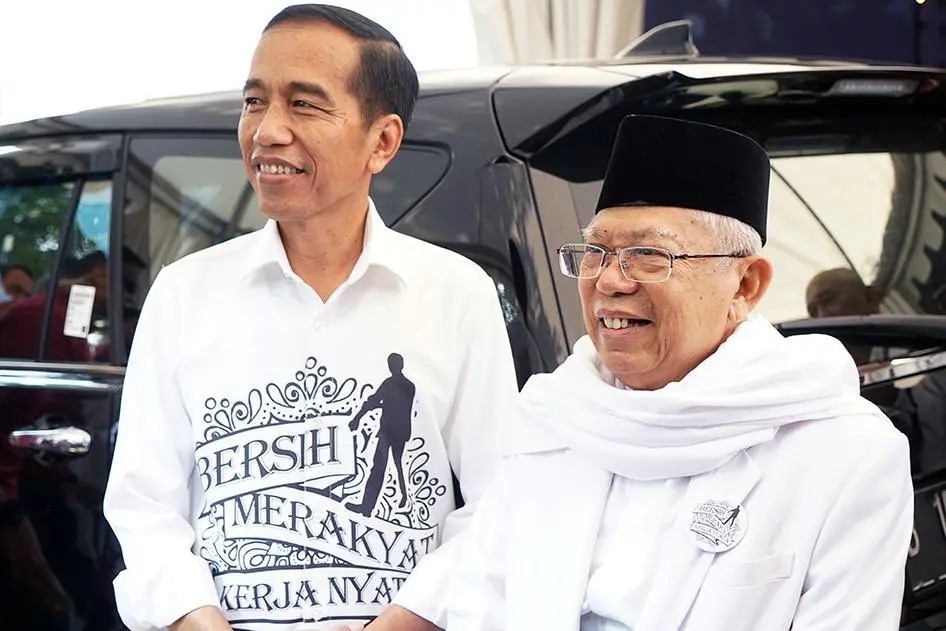
The article consists of two sections. First, he discusses how the oligarch’s political-economic move that involved religious institutions and propaganda in Indonesia has been a common pattern. The closest one was Jokowi’s presidential campaign in 2019–at that time against Prabowo–where Prabowo was supported by “Islamic radicals” and Jokowi responded by taking Ma’ruf Amin, the leader of Indonesia Ulema Council (Majelis Ulama Indonesia; MUI) and a controversial figure in the eyes Jokowi’s non-Islamis constituents. In short, it was a competition between those who could appear to be more Islamic. The second section discusses the postulates (dalil) from two major thinkers, Ulil Abshar Abdalla and Ahmad Suaedy, where Putra insists on the importance of “logical thinking in politics,” especially in the contest of religious country like Indonesia.
In the end, Putra asks Muslims to learn from Christian ormas like the Communion of Churches in Indonesia (Persekutuan Gereja-gereja di Indonesia; PGI), Indonesian Bishops’ Conference (Konferensi Waligereja Indonesia; KWI), and Batak Christian Protestant Church (Huria Kristen Batak Protestan; HKBP) who not only declined and critiqued against the government’s decision in mineral concessions, but also “have long accompanied, advocated, and organized those whose living space was seized to become mining fields.” Closing with a Gramscian tone, he says that these Christian ormas should be seen as “counterhegemony” against NU.
Photo(s)
Source(s)
- Laila Afifa, “List of Mass Organizations Declining to Obtain Mining Permit from Jokowi,” Tempo.co, June 12, 2024, https://en.tempo.co/read/1879117/list-of-mass-organizations-declining-to-obtain-mining-permit-from-jokowi.
- Muhammad Akbar Darojat Restu Putra, “Tameng Bagi Oligarki: NU dan Ekonomi-Politik Kebijakan Konsesi Tambang,” Islam Bergerak: Wajah Islam Progresif Indonesia, July 23, 2024, https://islambergerak.com/2024/07/tameng-bagi-oligarki-nu-dan-ekonomi-politik-kebijakan-konsesi-tambang/.
- “Nathdlatul Ulama Forms New Company to Manage 25.000 Hectares Mining Concessions,” JakartaGlobe.id, January 3, 2025, https://jakartaglobe.id/business/nahdlatul-ulama-forms-new-company-to-manage-25000-hectares-mining-concessions.
- Radhiyya Indra, “Muhammadiyah Welcomes Mining Permit Policy, Sparking Grassrots Backlash,” The Jakarta Post, July 29, 2024, https://www.thejakartapost.com/indonesia/2024/07/29/muhammadiyah-welcomes-mining-permit-policy-sparking-grassroots-backlash.html.
- Robert Henry Cox and Albert Schilthuis, “Hegemony and Counterhegemony,” The Wiley-Blackwell Encyclopedia of Globalization (February 2012), doi.org/10.1002/9780470670590.wbeog265.
Written by Abel K. Aruan (November 14, 2024); Edited by Abel K. Aruan (January 9, 2025).