

- Name: Griya Luhu
- Archive Type: Organization
- Location: Bali, Indonesia
- Founded: 2017
- Available File(s): Photos
- Keywords: Environmental organization, digital waste bank, Ida Bagus Mandhara, behaviorism.
- Link: https://griyaluhu.org/id/tentang/
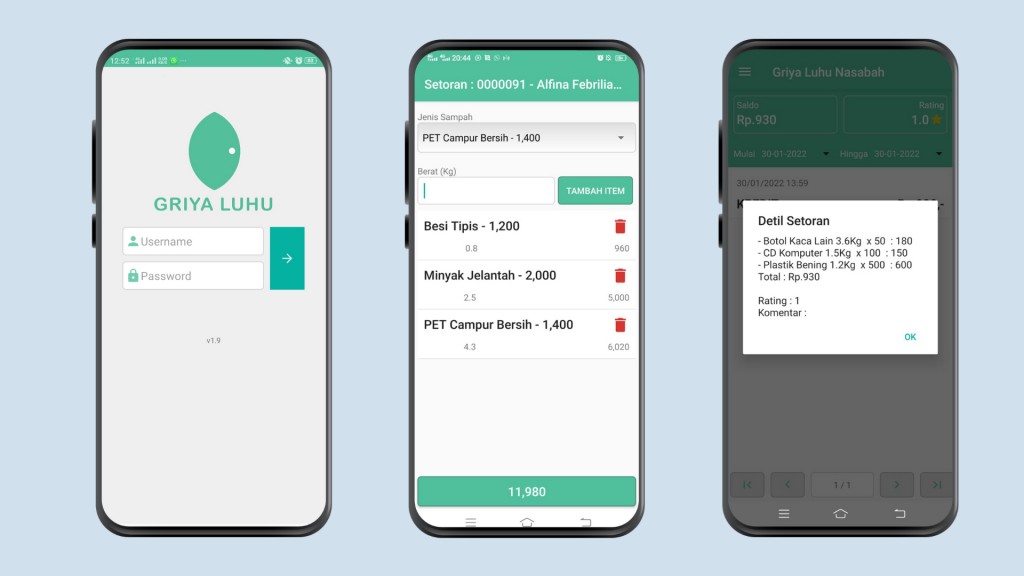
Griya Luhu is one of the ecopreneurs using digital technology to change people’s behavior and awareness towards waste management. Griya Luhu was founded by Ida Bagus Mandhara Brasika, a young scholar and environmental activist from Gianyar, Bali who saw that the waste problem in his hometown was not going away. Brasika formed Griya Luhu in 2017, which at that time was just a community, and started its initial activities by providing waste counseling to many schools. Finally, in 2018, Griya Luhu began to establish a waste bank, but the activity was unfortunately stopped by the local government due to the COVID-19 pandemic at that time. However, the spirit to fight waste continued to encourage Brasika and the people in the Griya Luhu community not to give up and instead, they succeeded in launching the Griya Luhu digital waste bank application and transformed it into a start-up company.
For Brasika, woman activist Mia Krisna, and those who joined Griya Luhu, public awareness about the environment is an important factor in addressing the waste problem in Bali. As noted on the Griya Luhu website, they state, “We no longer view the community as an object, but as a subject that drives a better waste management system,” and they try to realize this through a waste bank program. They began by providing education to increase public understanding and awareness of the importance of proper and sustainable waste management so that the community can become an active part of sustainable waste management. As of 2021, Griya Luhu has served 14 villages in Gianyar Regency, operating 74 waste bank units in the region, with a total of 4000 customers and managing 13 tons of waste every month.
Photo(s)

Source(s)
- Ni Kadek Restu Tresnawati, “Griya Luhu: Start Up Bank Sampah dari Pulau Dewata,” DetikBali, November 14, 2023, https://www.detik.com/bali/berita/d-7036857/griya-luhu-start-up-bank-sampah-dari-pulau-dewata
- “Komunitas Griya Luhu, Kelola Sampah dalam Sistem Digital,” Nusabali.com, November 10, 2020, https://www.nusabali.com/berita/84138/komunitas-griya-luhu-kelola-sampah-dalam-sistem-digital
Written by Abel K. Aruan (November 15, 2024); Edited by Abel K. Aruan (January 24, 2025).